
As every year during the “Salon International de l’Agriculture” (SIA 2026) of Paris, INRAE organized conferences and roundtables at its booth. We particularly enjoyed the session led by Sophie Nicklaus (Scientific Director for Food and Health, INRAE) and Catherine Renard (Director of the Carnot Qualiment Institute, INRAE) on “Innovating through Fermentation for Sustainability and Health”. This conference highlighted the growing impact of projects from the Carnot Qualiment Institute:

A study conducted in May 2025 on food supplements sold in the Republic of Ireland assessed the prevalence of health claims on labelling and their compliance with the European Regulation on nutrition and health claims No. 1924/2006, by comparing products sold online and in stores. It shows some regulatory non-compliances of the claims, illustrating that there are still difficulties in applying the Regulation 1924/2006, 20 years after its publication.

In March 2025, Anses issued a warning strongly advising against the consumption of dietary supplements containing the plant Garcinia cambogia Dsr. or preparations based on Garcinia cambogia due to the risks of severe adverse effects associated with its consumption. The decree of April 17, 2025, suspends in France for one year the importation, introduction, and marketing, whether for a fee or free of charge, of dietary supplements containing the plant Garcinia cambogia Desr and all preparations derived from this plant.
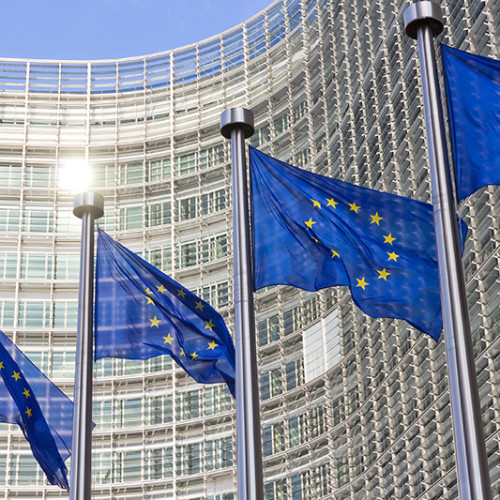
The European Commission requested the EFSA to update the framework for Tolerable Upper Intake Level (UL) assessment and the current ULs for some vitamins and minerals. When it was not possible to establish an UL, the Commission requested the ESA to determine the safe level which is an indication on the highest level of intake for which there is a reasonable confidence on the absence of adverse effects. Consequently, the EFSA published until 2024 the guidance for establishing and applying tolerable upper intake levels for vitamins and essential minerals and the scientific opinions on the tolerable upper intake for preformed vitamin A and bêta-carotene, for vitamin E, for vitamin D, and some essential minerals such as iron, manganese, selenium

Contrary to what it had announced, the DGCCRF has suspended the Téléicare online declaration service since September 7. It is currently impossible to subscribe to the online procedure and use the new product notification service. Contrary to what it had announced, the DGCCRF has suspended the Téléicare online declaration service since September 7. It is currently impossible to subscribe to the online procedure and use the new product notification service.

À l’aube des Jeux Olympiques 2024, il est important pour les sportifs de savoir que l’application de la norme européenne NF EN 1744 les protège en limitant les agents dopants dans les compléments alimentaires pour sportifs.
On 30 April 2024, the Food Standards Agency (FSA) and Food Standards Scotland (FSS) concluded based on the opinion of the Advisory Committee on Novel Foods and Processes (ACNFP) that novel foods, synthetic cannabidiol (CBD) and CBD isolate developed by Chanelle McCoy Ltd and Cannaray Ltd respectively were safe under the proposed conditions of use.
The DGAL, through Synadiet, organized 2 webinars (on April 23 and 29, 2024) for manufacturers in the food supplements sector. These 2 webinars aimed to present the next steps to come in 2024 concerning the change of administration and therefore of the notification system for food supplements on the French market. During these webinars, the DGAL explicitly stated its desire to build the new tool in a scalable manner and in collaboration with the various feedback from manufacturers. Thus, the DGAL was able to announce the opening of the beta versions of the ingredients database and the new Compl’Alim notification platform, before their official launches planned for the 2024 school year (September). Until September, Téléicare remains the official platform for notifying your food supplements, but will become obsolete upon the official launch of Compl’Alim.
The use of algae biomass in foods is a growing market in Europe. On February 2024,a list of more than 20 new algae species has been added to the Novel Food catalogue. When there is the evidence of a traditional use of algae in any EU Member State before 15 May 1997, their use as foods and food supplements is not considered as novel and is not subject to a long and costly pre-market approval procedure according to the Novel Food Regulation. A list of around 50 algae species considered as not novel is now available in the EU Novel Food catalogue.
In order to be marketed on the French market, a food supplement must be subject to a prior declaration to the competent authority in accordance with Decree No. 2006-352 on food supplements. Since February 3, 2023, food supplements have been declared to the Directorate General for Food using the online declaration platform téléicare.



 Français